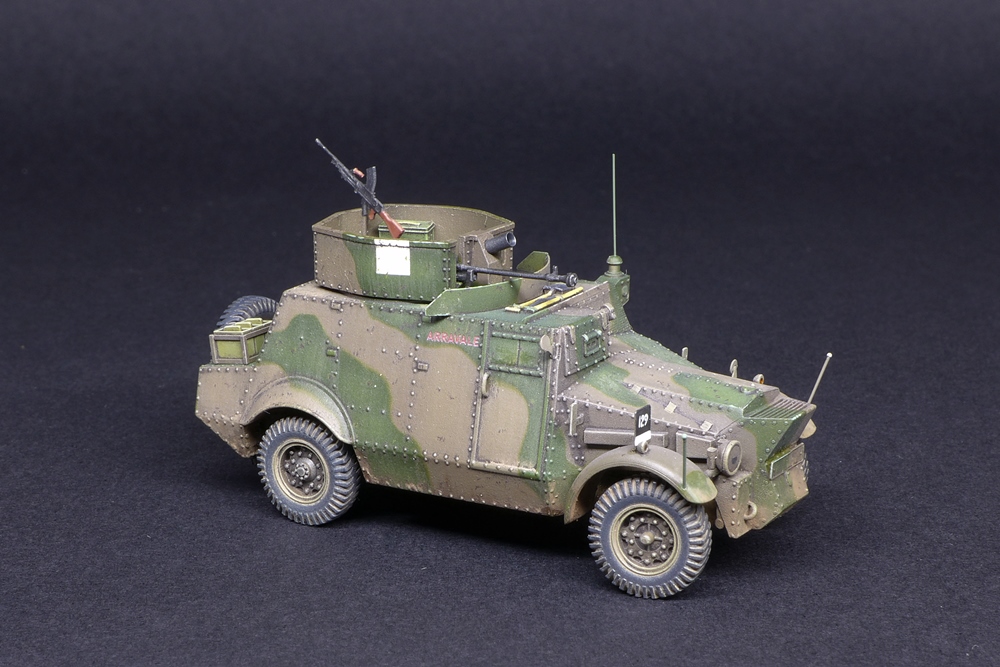
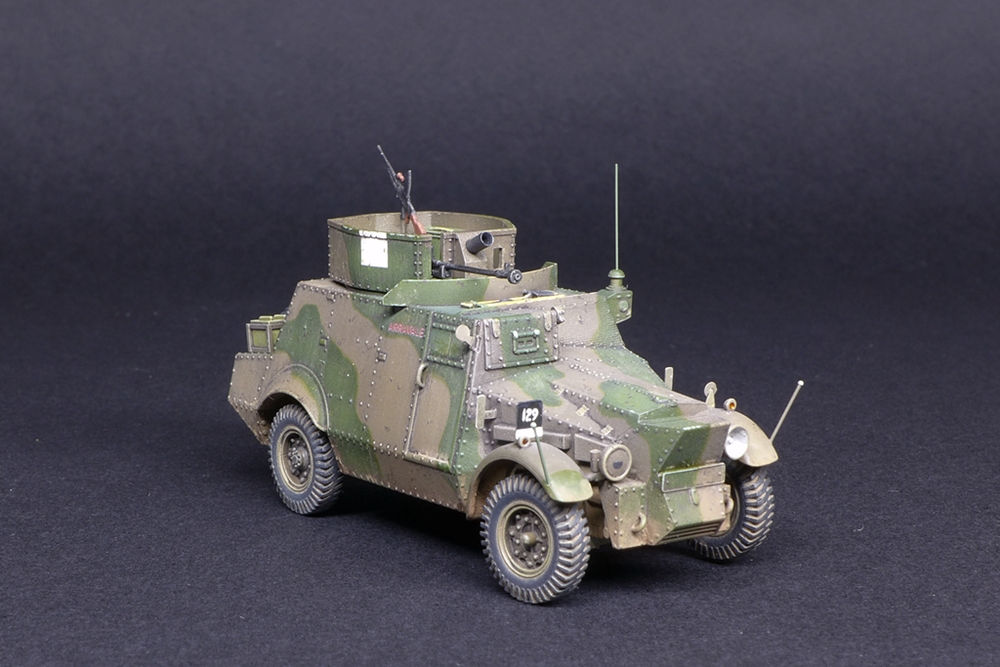
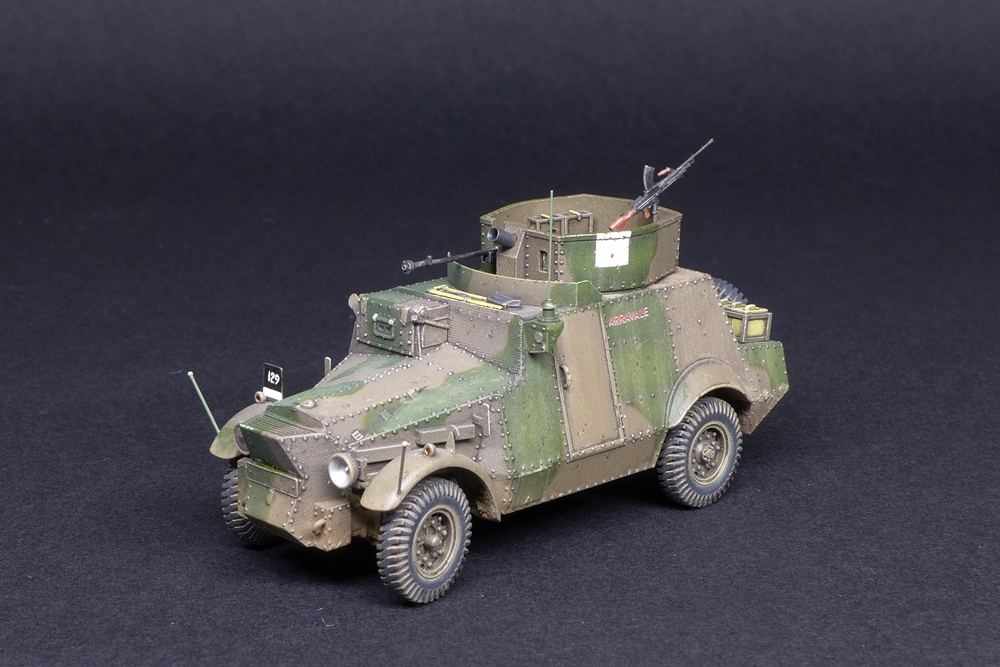
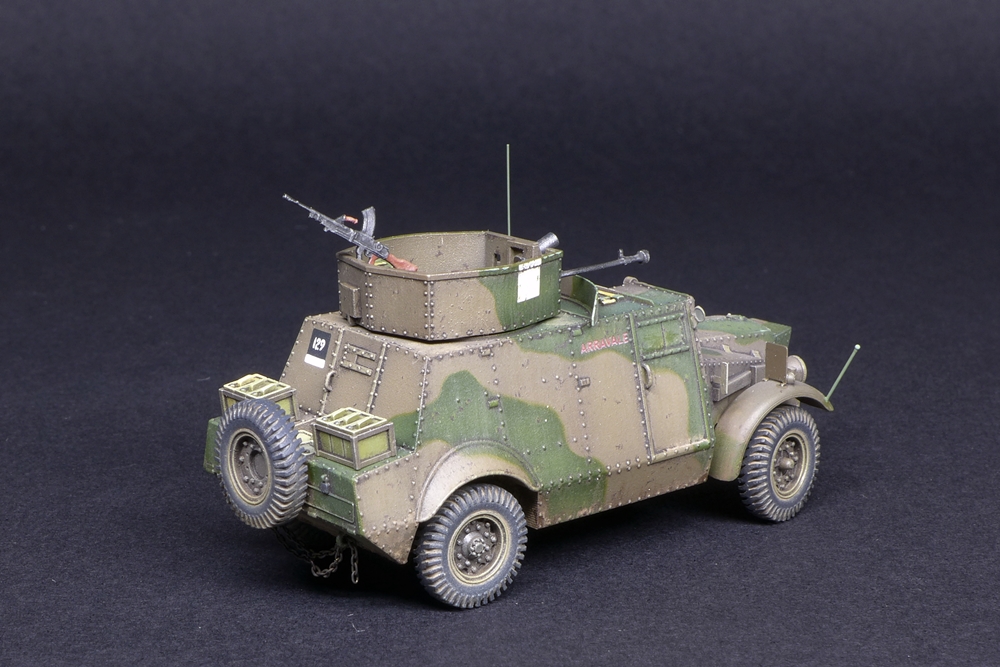
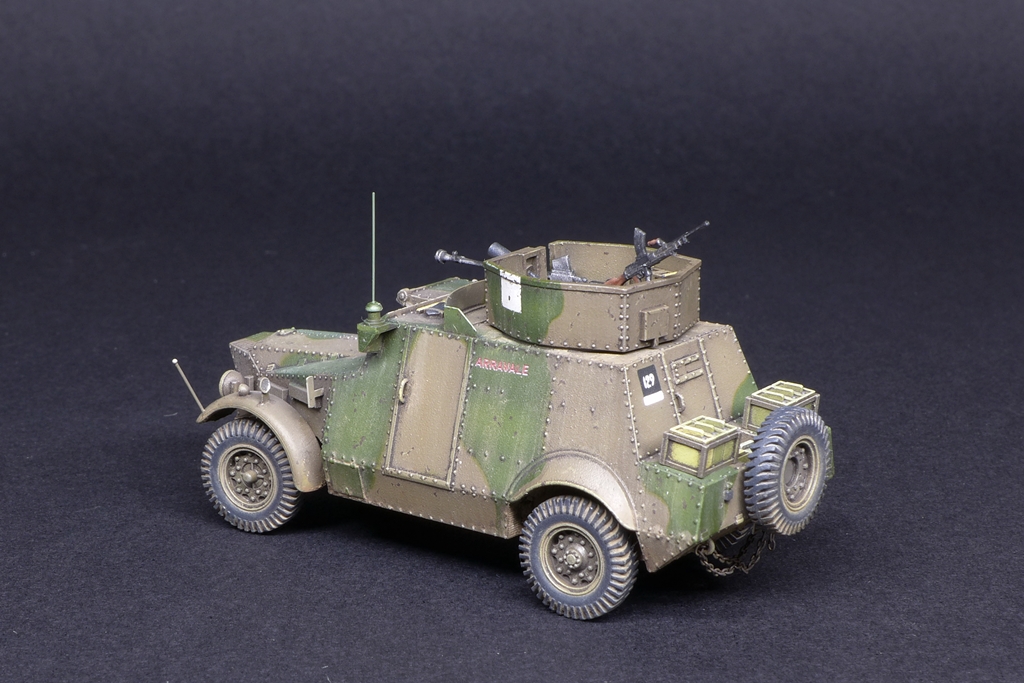
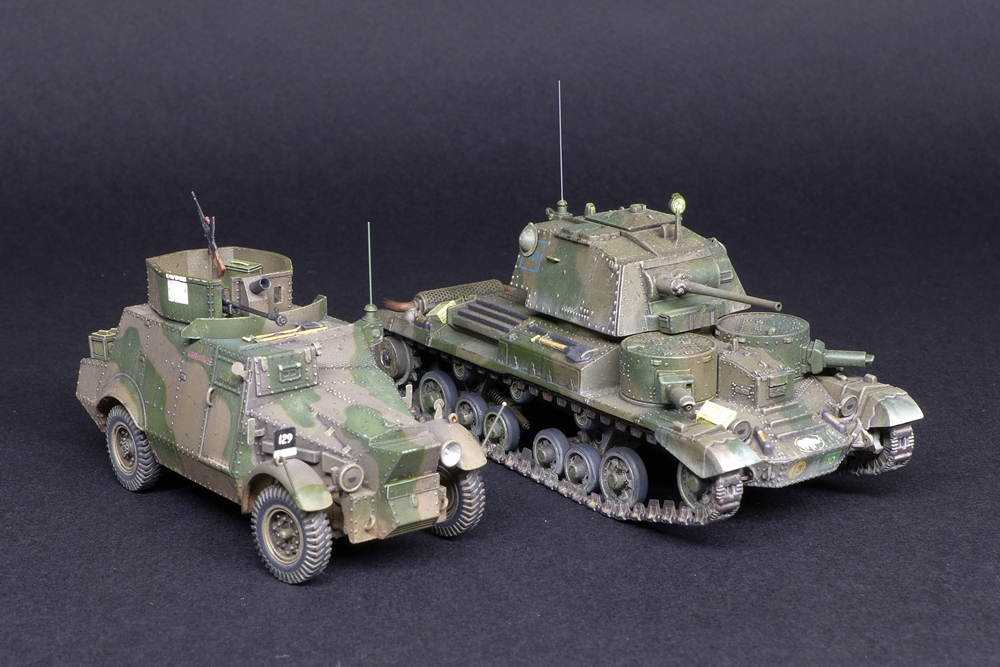
Morris CS9 British Light Armoured Car 1/72 Planet Models
The Morris CS9 was a British light armoured car developed in the late 1930s for the reconnaissance units of the British Army. It was based on the chassis of the Morris Commercial CS8 utility truck, modified to accommodate an armoured body and armament. Its design reflected the British approach to light wheeled reconnaissance vehicles of the period, combining reasonable mobility with ease of maintenance and low procurement costs.
The first Morris CS9s entered service with British units before the outbreak of the Second World War. In the autumn of 1939, they were deployed in France, notably with the 12th Royal Lancers, where they carried out reconnaissance duties as part of the British Expeditionary Force (BEF). During the retreat to Dunkirk in May and June 1940, their shortcomings became apparent: inadequate armour protection, an open-topped turret and limited cross-country mobility.
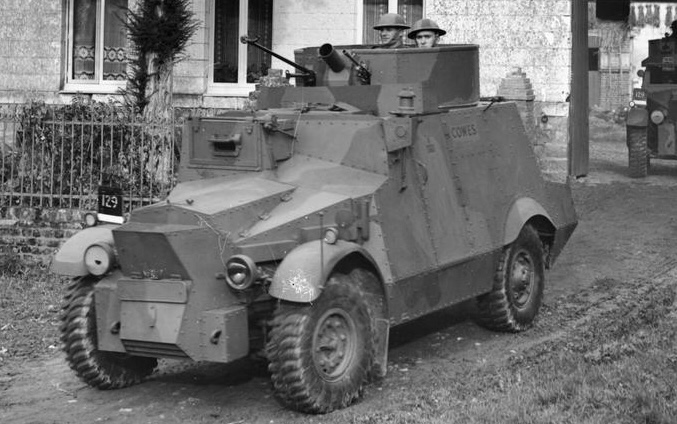
Other vehicles served with the 11th Hussars in North Africa, where they took part in operations against Italian forces in Libya. They performed reasonably well on desert tracks, particularly when fitted with suitable tyres, but the rapid development of armoured vehicles gradually exposed their obsolescence. The Morris CS9 was therefore primarily a transitional design that helped the British Army bridge the gap between older armoured cars and more modern reconnaissance vehicles.
The model was released by Planet Models, a Special Hobby brand specialising in limited-run resin kits, sometime around 2023. The manufacturer offers it in two boxings. The first contains two vehicles deployed in France, while the second focuses on the Morris CS9 in North Africa.
I decided to build the BEF version first, even though, in my opinion, the North African boxing offers a more attractive camouflage scheme.
The kit contains a handful of parts, a small photo-etched fret and a tiny decal sheet. The larger components are 3D-printed and cast in resin, while the remaining parts are 3D-printed. I have to praise the nicely rendered weapons and wheels. The other details look good, too. Some areas show visible print layers, an unavoidable trade-off with this technology. Initially, I considered sanding them away, but I was certain I would damage the surrounding details, particularly the nicely reproduced rivets. In the end, I decided to approach the build more or less straight out of the box and treat it as a bit of an experiment.
The build itself presented no particular challenges. I cannot recall any areas that caused me significant problems, and the parts fit together quickly and easily. For the camouflage, I used a combination of AK 3rd Generation and Vallejo acrylic paints, followed by washes and weathering using the traditional combination of AK and AMMO products.
The decals, once again sourced from Eduard, were a definite disappointment. The red “ARRAVALE” marking has a white underprint, and the registration is, of course, poor, with the white showing around the edges. Eduard really seems unable to get its decals right, no matter how hard it tries. Even so, I am pleased with the finished model, and I was pleasantly surprised to discover that the print layers are far less noticeable on the painted surface than I had expected.
This interesting and relatively uncommon vehicle is a welcome addition to my collection of British military vehicles. I hope Planet Models will continue to produce similar subjects in the future.